Couple of things first
Let me just first say (1) my point in this post is the value of context and (2) I wish Lingq would use the data they already have for flashcard and other tool generation - and use it effectively.
My Tool
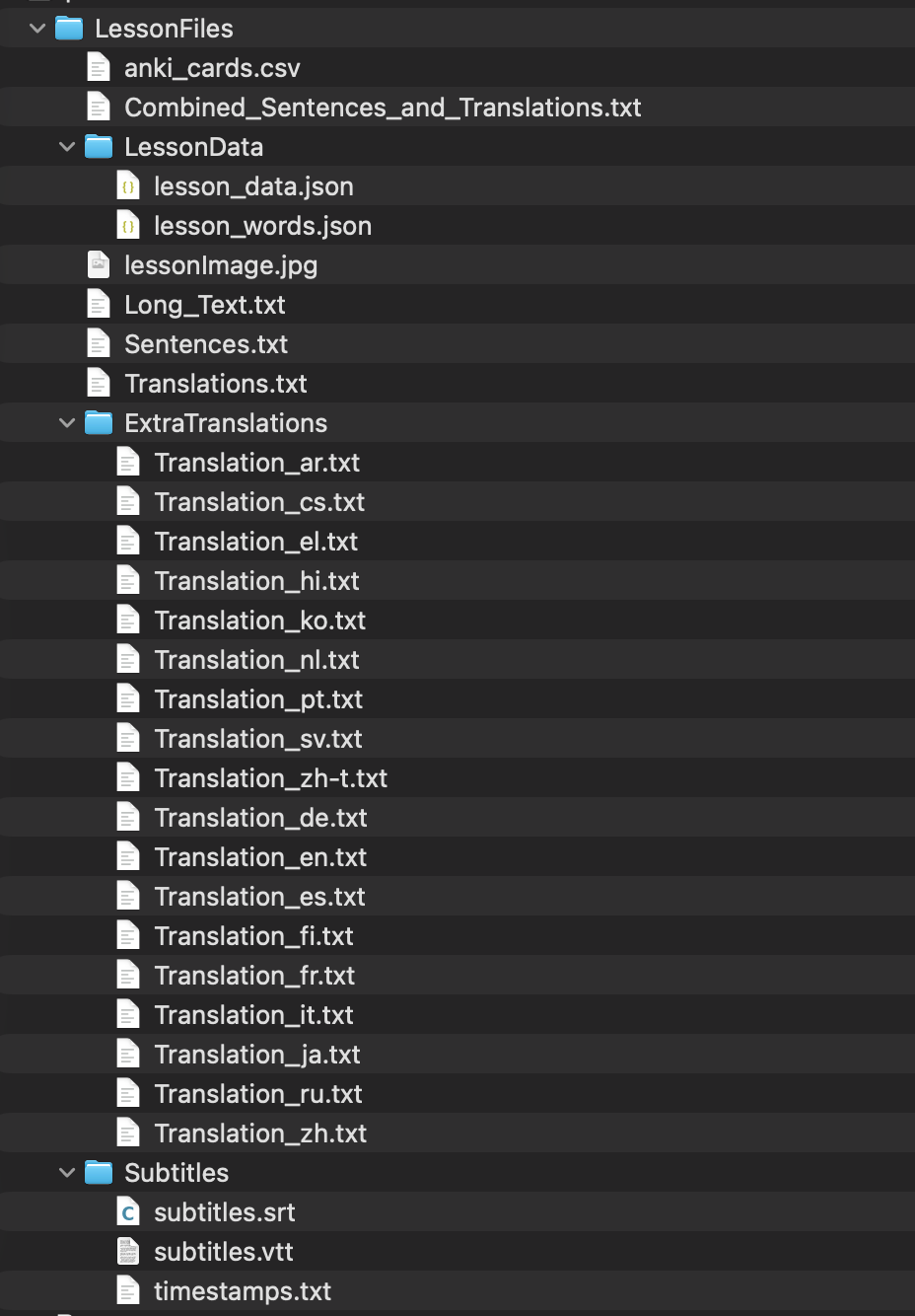
My tool is a command line tool that gets its data from a collection of files for a lesson downloaded using the web extension tool of @roosterburton. You can find details here: Web Browser Extensions (Software) for LingQ Dan Burton is a pro, and I’m just a retired pro become a hobbyist. Nothing I’m doing is suitable for prime time.
At the moment what I find my tool is most useful for is to extract the Russian multi-word phrases I have “lingqed” and the English language I chose when I created that lingq. As we all should know, trying to lingq multi-word text is primitive at best in Lingq. First it has a nine word limit. Second, it’s “finicky.” It usually takes several tries to select the words I want, assuming it ever does.
Full Sentences
My tool does find full example sentences for all lingq’d words - once again thanks to the “Combined_Sentences_and_Translations.txt” downloaded using the above-mentioned web extension. That file does a great job to bring together the lesson text and translation. If that extension can pull that out, it must be in the data Lingq keeps with the lesson somewhere in its data. Example:

I take advantage of the downloaded data from the web extension which is extensive. I make use of the sentence/translations file mentioned above and the “json” files that contain the lesson data. I spent some time fishing around in those “JavaScript Object Notation” (JSON) files until I found what I was looking for and figured out how to extract and use it.