I would not even mention AI in the context of learning a language, because learning a language change also your way of thinking and you get a broader spectrum of perception. Personally I punish people who overuse and overrate AI “mit einem Blick der Verachtung!” … and now try to say that with the right emphasis! Instantaneous AI translation will not give you the correct emphasis and you will stay there “wie eine Gurke im Joghurt!”.
To be sure most people will use AI for instantaneous translation when it is ubiquitous. But there will still be those who wish to learn languages for their own satisfaction.
I wondered what would happen to chess after computer programs beat the top human players. At this point a smartphone can beat the world champion. But people kept playing chess and started using computers to improve their play against other humans.
Just as we see programs like LingQ making it easier to learn languages so we can communicate with other people.
AI will, however, make it harder, generally, for professional translators to make a living.
3 Likes
Steve Kaufmann YouTube - 7 tips for staying motivated when learning a language
Steve Kaufmann YouTube - Stop worrying about motivation. Focus on this instead
I’m reading the book Atomic Habits on my Kindle right now, and although I’m only 13% through, it basically talks about how systems or our habits decide our outcomes. I would recommend picking up a copy.
1 Like
- AI translators will always need to listen to the full/most of the sentence before translating.
- Multiply that by two for each question-answer pair and I suspect the silence/delay could easily be 5+ seconds long.
Tolerable for a short discussion, but infuriating for a 2-hour (technical) meeting.
1 Like
Yup I think AI will eventually make it a lot easier to learn a new language, especially in skills like speaking. AI/robot could be around you like a parent/teacher 24/7. Teaching you, guiding and tracking your learning constantly. Adjust and tweaking to make it super efficient. This will be even more intensive than even those intensive language learning school.
3 Likes
Why do you believe that?
One could have argued that with the invention of the CD and its superior audio quality vinyl would vanish, but still at least here in Germany the amount of money spend on the latter is rising from year to year for ~25 years now.
AI is a tool and as such may change the way professional translators work, as they will probably start using them partly. But I am not convinced that people in business meetings or in international politics would want to rely on the translations made by an algorithm programmed by some big tech company.



On topic: My personal motivation why I started to learn languages is self-optimization. I just want to be able to understand the languages for its own sake. I am not planning and will most likely never speak them.
In addition, people, including native speakers, don’t use the language perfectly and usually not all alike. There is always some personal touch to it. So when speaking to someone, the informations you share and receive isn’t solely restricted on the matter you are talking about, but also partly their personality. You get to know people if you talk to them. Furthermore, it’s said that 90% of human communication is non-verbal. Whether this number is exact or not (it probably isn’t), a huge chunk of what we are saying is said without words. And the words we are using is accompanied by a certain tone, facial expressions etc… Using an ai for translation is completely taking away these aspects. If you compare how it is to talk to others on the internet versus in real life you should already get an impression of how restricting not using direct speech is.
So long story short: No, I don’t think ai will make learning languages obsolete. But it will allow those who don’t have the time or energy to learn one to talk to strangers anyway, which is an improvement imho.
1 Like
It’s a complicated answer to be honest, and a little hard to remember.
My last name may as well be Jemandmann, which when given the option to study German or Spanish in HS, made me pick German and I kind of just went along with it through college.
Swedish came with a little more intention. I heard DotA by Basshunter and was interested in how much I could understand from German. Same with the film Låt den rätte komma in. It also as I have seen, was all around me, once I new where to look.
Norway is close to Sweden, and the languages are similar clearly need to learn that.
After a year Swedish and Norwegian, I wonder if I can read Danish? I can, may as well learn that too.
I exercise a little more intention with my time these days. It gets spread a lot more thinly than it used to.
2 Likes
2 Likes
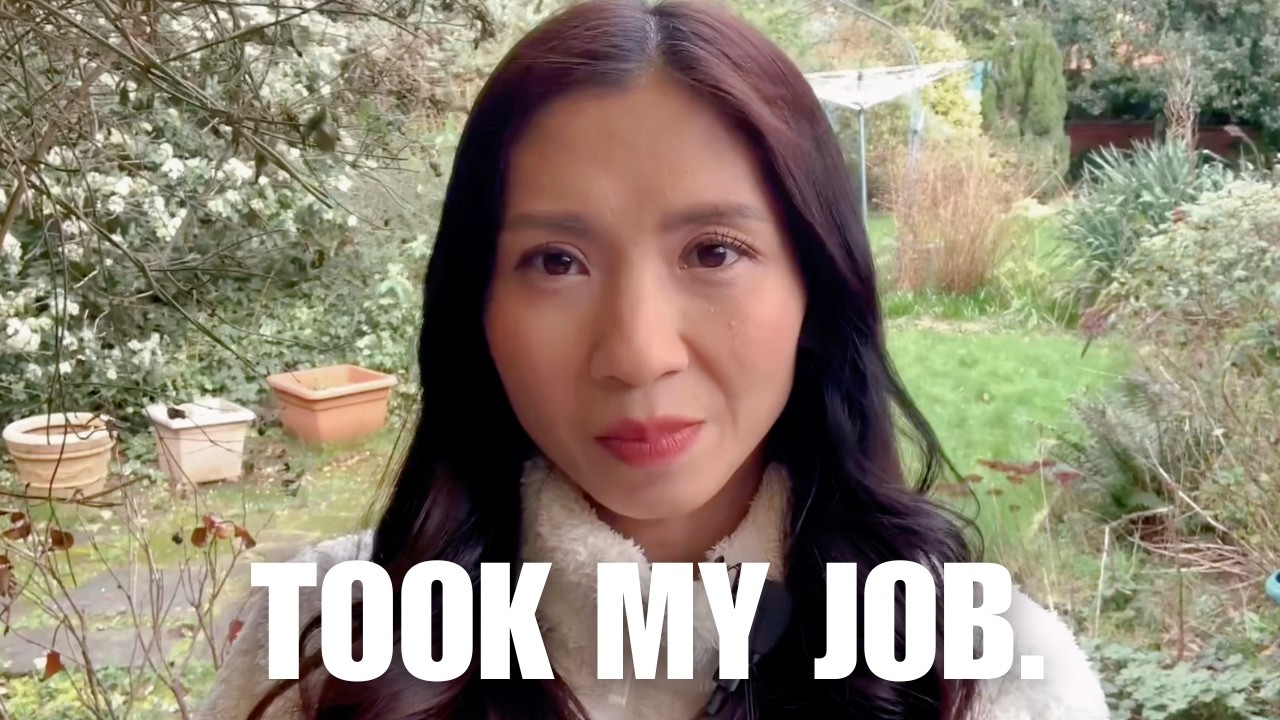
This is one example, and not one among those I mentioned in my post (translators working out deals between companies or countries). Of course, each technological advancement will render some professions less useful (or not needed to the extent it is needed now). But I would assume that this will only cause a temporary inbalance between the amount of translators available versus the amount in which they are needed, causing situations like the one the woman in the video you linked describes. However, on the long run some translators will move on to a new businesses and things will even out. It has been like this in the past all the time, when a new technology or social development comes up, that people complain about XXX is taking away their jobs, which it does, but only to a certain extent. It doesn’t mean that on the long run those professions become useless.
We still have carpenters despite their is IKEA.
We still have butchers and bakers despite having supermarkets.
People still go buy at stores despite their is Amazon.
People are still buying vinyl and CDs despite their is streaming.
People are still buying physical books despite their are ebooks.
Yes, the need will reduce, and on the short run it will become probably harder for some of those translators. So the statement is partly true, but not in the general way it was made.
Of course, this is just my assumption. I can be wrong.
This is only Discipline. This is The Way.
1 Like
Vinyl disks are a minority interest, most of us download. I tried playing vinyl disks while driving, but swerving into oncoming traffic was not ideal.
Ignoring supermarkets, my local town does not have a butcher, the only fruit and veg grocer, a very good one, disappeared during covid. The number of butchers and grocers is small. My village has one of each, I don’t visit, and two smallish shops owned by supermarket chains.
Amazon and other online shops have taken a lot of business from the high street. My local town has countless empty shops on the high street, those that remain are mainly estate agents, charity shops, hairdressers, coffee shops, hardware shops, bars and restaurants. I believe that is common.
As regards carpenters, you are probably thinking of joiners who make furniture, carpenters are more for roof frames, sheds and so on i.e. not fine wordwork. I think most joinery long since moved to the Far East. Ercol is an English company, started by an Italian immigrant, that makes high quality furniture, both in England and overseas. They are the exception and not cheap. As an aside, most of my furniture was made by Ercol in the sixties and seventies and restored by me. Robots will allow some manufacturing to return to Europe, as it will drastically reduce labour, and of course transport, costs.
It will be interesting to see the response of the French to a tourist who speaks perfect French via a translator machine. Will they shrug and walk off, or engage? (I am kidding, I always found the French very pleasant.) Germans and Danes will of course just answer in perfect English.
As suggested earlier, AI will make simultaneous machine translation routine, but it will also make it easier to learn a language. My experience dealing with overseas companies is that British companies do not employ translators, except for user guides and marketing materials. Basically we are limited to dealing with companies who speak English, which is largely the lingua franca today. So machine translation will perhaps markedly increase the number of countries and companies we can sell into, and buy from. And that might increase the number of translators needed for user guides and marketing materials, as those need to be accurate. So paradoxically. we might need more translators. But they might not be true translators, rather native speakers who use a machine to translate from the source language, and then polish the language to make it sound more natural. So perhaps we won’t need more translators.
But by that time the AMOC ocean current that warms Europe will have shut down, sea levels will have risen, flooding coastal areas and Holland, turned Britain and Northern Europe into frozen wastelands, and machine translation will be irrelevant for most of us. Time to learn Innuit methinks. LingQ surely has an Innuit course, if not, they should.
In Germany in the year 2025, more than 40% of the physical sold copies of music albums were vinyl. And there is a rising tendency. You are correct, though, that digital music distribution makes up for the majority of consumption. I for one buy no physical CDs anymore, as I lack the space and listen to a lot of Japanese bands, where a physical copy would cost me twice the amount if not more than the digital one or isn’t even available here.
In the city where I live there are plenty of small vegetary stores, bakeries (tons of them) and a couple of butchers. I didn’t claim that things don’t change. But not everything disappears completely, and some stuff just becomes more specialized.
In regards to Amazon: I buy stuff their mainly, too. My main reason though is that the service when going to a store isn’t good. I usually had to go twice in the past because the information the staff provided me was wrong. When I was a student we already had a saying: “Dienstleistungswüste Deutschland”. However, a collegue of mine prefers going to a store instead of buying online. She enjoys it, I hate it. It’s a matter of personal taste, too.
Amazon has some advantages, too, though. Quiet some of the stuff I buy there is from regional companies who cannot effort such a distributional network. My underwear is from a german startup, a man and a woman who look like in their 20s. I buy noodles and have bought wheat from local farmers. I have bought rather specialized stuff for my pc, including a modified truck shifter from a company in Poland. It’s also a chance. And I am not sure whether it is a problem if all the stores in the city disappear. At least here in Germany we have a lack of affordable living space, especially for families. Distributing goods from warehouses outside of the city to the people and reserving the space in the cities for living space, schools, kindergardens and parks seems like an improvement to me. Not to mention the reduction in traffic if people stop driving their 2+ tons vehicle to the supermarked to buy stuff weighing only a few dozen pounds.
I can imagine some parents deciding that their child should learn, oh I don’t know, let’s just say Mandarin Chinese for the sake of argument, and buying a Mandarin speaking robot to play with the child and act as a tutor. Children could grow up speaking several L2s to a native level. And in fact you could have home schooling too. I’m not convinced that would be good as socialising is an important function of school.
2 Likes
Clearly you haven’t been following what’s happening to professional programmers with regard to AI. And no, I didn’t mean that AI will wipe out translators entirely.
Coding and translation are about at the top of the heap for what LLM AI does best.
I like to keep my streak going and have a rough target of words to read each day.
Reading decent books helps my interest levels but sometimes they are far harder than are ideal. But easy things can be small, fiddly or not very interesting. Reading decent books seems like a good end in itself.
Back in March, I flew into Frankfurt with a bunch of American passengers coming from Dallas. At the airport in Frankfurt, the immigration officers were speaking English to the Americans going through the counters. But the moment I greeted the officer in German, the guy just switched gears and started asking me questions in German.
“A couple years ago, when I was living in Germany as a foreign student, I saw something on a train that really stuck with me. There was this Russian guy, probably in his fifties, riding without a ticket. The ticket inspector caught him, but there was a problem: the inspector didn’t speak Russian, and the man didn’t speak German. Total communication barrier.
So the inspector looks around the train and asks, in German, ‘Does anyone here speak Russian?’ A German woman raised her hand and said she did. Then the inspector told her, ‘Ask him how long he’s been in Germany.’
She asked the guy in Russian, then turned back and said, ‘One month.’
And the inspector replied, ‘One month is long enough to understand the basic rules of train travel in Germany. Not knowing the rules is not an excuse for riding without a ticket. Next time, he’ll get a 65-euro fine.’
The woman translated everything back into Russian, and the guy just nodded.
What hit me wasn’t the fine or the argument. It was the fact that, because I understood German, I could actually follow what was happening between all these different people. I wasn’t standing there lost or disconnected from the world around me.
That moment taught me something important: if you only know one language, you’re living a very shallow version of life. Every new language opens another door into how people think, argue, work, and live.
So if you’re grinding through German right now, wondering whether the effort is worth it, trust me — it is. None of that time goes to waste.
7 Likes
No, I haven’t. Hence my question. And because you’ve made a rather general and vague statement and still do. Instead of telling me that I don’t know what I am talking about, you could just enlighten me 
I didn’t think so and don’t think I have written that. But again, you statement was vague. I could only guess what you were trying to say. And the more someone needs to interpret what you are writing, the more likely that interpretation is wrong.
That sure is the case. However, that hasn’t been a secret. How long are people using Google Translate and the like? And I have been using AI for little coding tasks, too. I am not sure to which extent an AI is capable of dealing with large projects, though, that includes millions of lines of code. It could be useful for the more tedious tasks involved in programming, I guess.
Btw.: Considering that we have an own term “crunch time” (which is even used in Germany) for butchering on the programmers health in order to finish a software product in time because of bad time management, I am not sure whether it really is such an issue if workload is taken off the shoulders of those people.
However, programmers, translators and the like are high skilled well educated individuals. They will most likely find something else for a living, especially considering the lack of workforce. IT, btw, is on of the areas where there is such a lack. 90% of all european it companies are lacking workers. Germany alone lacks 100,000+ it workers, especially those with an expertise in ai, which can expect a growth in salary of about 50%. Germany also has a lack in professional drivers, teachers, people working in the health industry and so on and so forth. And the picture is the same in the rest of Europe. In the US it is expected that there is a lack of about 1.2 million (!) it experts. So those who have been losing their jobs will most likely find a new one in a similar field.
For translators the situation seems to be similar. Simple translation tasks are taken over by ai, but highly specialiced translators are still needed. This is the case for technical or medical translation, where precision and knowledge in the respective field is required as well as for translations where the cultural aspect is important. Translators are also used in fields where direct communication is necessary, as stated in previous posts. You don’t want a machine to talk to a refugee if you can avoid that, and surely it isn’t very polite when talking to foreign contract partners or politicians. In addition, the demographic shift is affecting this area, too.