I’ve run into the classic mistake of focusing so much on comprehensive input and neglecting grammar that i’ve now reached an awkward stage in a few of my languages, although this post is mostly about Russian.
Long story short, my comprehension seems to be at a strong b1 or lower b2 and when I speak I also have a decent vocabularly and flow. I have used my Russian fairly extensively “in the wild” travelling around many Russian speaking countries and speaking lots to locals, I have a functional knowledge, it’s just very broken. My issue is when speaking, I frequently hit a wall as I lack many basic grammar concepts.
Interestingly, I seem to (Mostly) understand these grammar structures in content when reading/listening, so the knowledge has seaped into my head to some extent, i just need to actively learn it and how to use it.
This brings me to my main question for this post. As someone with a decent vocabulary and comprehension, HOW and WHERE can i start learning these grammar fundamentals? I’ve been putting this off for years and want to finally address it. I have The New Penguin Russian Course, is it really as simple as just reading through it, making notes and then trying to notice these patterns in my comprehensible input?
I have the same problem as you in Ukrainian, which has similar grammar. For the past year, I’ve been tuning up the grammar gradually.
I suggest a multi-pronged approach. You could do worse than reading the New Penguin Russian Course (I have it and have read much of it), but I find other approaches more effective. For example, you could probably get the most bang for your buck if you printed out a chart of the cases and reviewed that daily, then did drills using AI or other programs for feedback and correction.
My main drill right now is to say a sentence out loud in Ukrainian that sounds right to me, then I input the corresponding English sentence into the Deepl translator. Then I see where I might have made some case/verb of motion errors. Gradually, I am making fewer errors.
I am fortunate enough to have found tutors and programs that gave me the grammar fundamentals I needed for Russian. However, I had the time and money to spend 8 weeks in a grammar oriented summer language intensive program at the University of Virginia. Very fortunate.
Whoever and whatever you find, do not settle for anything that just gives you lists of rules. There is logic behind the most useful and fundamental rules. Alla Chernyshova & Stanislav Chernyshov appear to have such a program. You can find it here: Active Russian Grammar.
Alex Misbach taught at the U of V program I mentioned above until he graduated. He does understand the right approach to Russian Grammar, and you could try reaching out to him.
What I took away from the U of V program that was permanently helpful was how the spelling rules inform how word endings are spelled when nouns and adjectives are declined. This greatly reduced the number of endings I had to master, because knowing the basic endings you can navigate to all of the other endings if you understand the logic of the spelling rules.
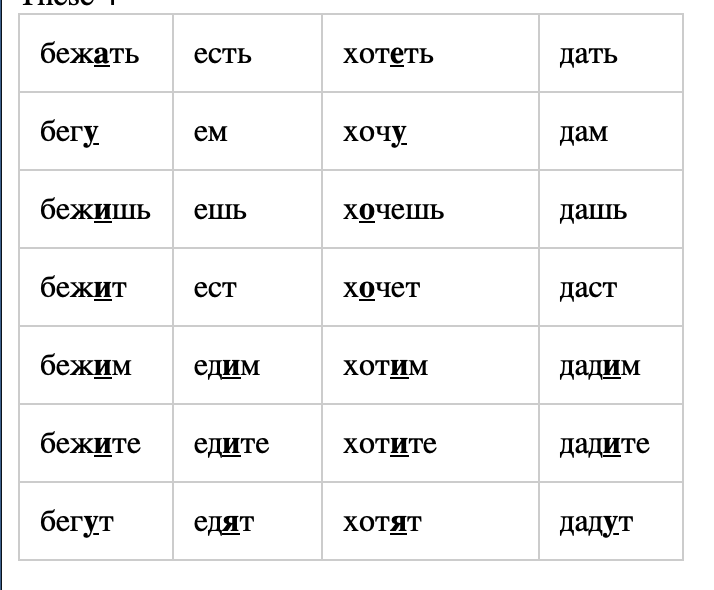
Also helpful is to know that in reality there are only 4-5 truly irregular verbs. And once again, don’t let spelling make you think there are more variants. There aren’t. There are rules that force you to spell some differently when in fact it’s the usual suffixes at play.
I’m at a similar point with Russian-- lots of input, but getting stuck on grammar if I try to speak. Had two years of college Russian, which was mostly grammar, but that was many years ago.
What works for me for speaking is parroting along out loud with the recorded drills in the Modern Russian course.
It takes many hours of repeating things out loud, but I’m confident that when I finally get around to finishing up the Modern Russian course, I’ll be able to speak without much difficulty.
A summer immersion course is great too, if you can do it!
I did a summer immersion course going in with zero knowledge, which was fun, but intense. If you already have some basic vocabulary, I think that’s when an immersion course really jump starts your progress.
Another possibility, since you have experience in the language, is learning grammar the old-school way, and working through the exercises in Pulkina. This requires having someone available to check your work.
I’m a big fan of Comprehensible Input, but I don’t depend on it for complex grammar.
I created a set of custom index cards covering verb conjugations for the three conjugations plus the most useful irregular verbs. I refer to them with some regularity. When I am using LingQ, I often use Reverso to refresh my memory of irregular verbs.
Plus I look up grammar issues in books, online or ask AI. Then I take notes on what I learn in my current French notebook. I have found AI quite good for grammar.
In other words I use input to guide my grammar study. When I do written output, I use that for grammar questions and notes too.
I’ve never been one for formal courses. I learn by doing.
Also when I read, I read actively. I notice as much as I can and check to see if I understand.
Does the tense, person, number and reflectiveness of the verb make sense?
Does the adjective agree with its noun?
Does the pronoun agree with its antecedent and its position in the clause?
Does the clause make sense and how is it linked to other clauses?
Have I seen this grammatical form before?