For those of you who are learning Spanish,
How do you deal with those words that are different in each country?
Do you choose a country or learn in General ?
For those of you who are learning Spanish,
How do you deal with those words that are different in each country?
Do you choose a country or learn in General ?
When you begin, you need to pick a main region, to avoid mix ups, but you should also be aware of region-based variations. See: Spanish Words That Change in Spain and Latin America
It’s not unique to Spanish: in English, you shouldn’t write
“The colour (UK) of the trunk (US)“
Same in French, Portuguese, etc…
I think choosing a variety is practical advice. If you know your focus will be engaging with primarily one country, I’d say focus on that country as you can.
I intended to, but I kept being drawn in by content from various countries and my Spanish speaking friends are from everywhere in LatAm, so I speak in a kind of generic LAtAm Spanish. I learn vocabulary from the various countries where the words differ and only as I encounter them or need them.
I don’t see this as a huge hurdle. Sometimes I’ll be having a conversation and we’ll have to clarify what we are talking about in other words, and sometimes the differences are really funny.
You can always familiarize yourself with the differences that might really raise eyebrows, but in reality is if you stumble across one in conversation it usually just results in laughs and a fun discussion.
¡Suerte!
I don’t know if it is comparable, but in Germany people use different words and phrases for all kind of stuff in different regions. So there are already dialectal differences, which I assume exist in other languages, too, including Spanish. It would probably be good if some native Spanish speakers answer this, but I am not sure whether it is really an issue if you mix those different forms of Spanish.
In school we learned English first off in the British form, then switched to American English later on and got back to British English. I never bothered about this and improved my English later on by talking to others in the internet. Those where Americans (Both U.S. and Canada), Brits, people from other English speaking countries as well as non-natives with varying degrees of skill. So I assume I use some mixture, too, and I have no clue whether a word is U.S. English, GB English, etc… However, noone ever pointed me out for that. I assume similar to the above mentioned word variations among dialects people can guess the meaning from context.
Overall the language is largely the same, I guess, no matter where spoken. Otherwise it wouldn’t be considered one language.
Steve K said somewhere it doesn’t matter. It’s all Spanish. I’ve followed that advice since starting.
Just be aware of differences that could be offensive or rude. A French person should avoid phrases such as t’as de belles gosses! in Quebec, Canada. Instead of saying you have lovely kids, you are complementing them on their beautiful testicles.
With English, Brits are likely to understand Americanisms, even if they wince, but the reverse is usually not true. There might be a similar situation in the Hispanic world.
That’s actually interesting. I’d never been aware of those differences, or more precisely them beeing that big. Maybe it is because we had both versions of English in school. The only differences I can point out directly is petrol and fuel (I think petrol is British English), truck and lorry (the latter beeing BE) and I think Americans don’t say “bloody”. But that’s essentially it. And maybe prison and jail, but those could be just synonyms, too. Besides I am not aware of any differences. (Whether that’s lack of knowledge or ignorance, I can’t tell  ).
).
I think prison and jail are synonyms as you say. The differences are actually many.
Some examples, American form first, English second.
Sidewalk, pavement
Freeway, motorway.
College, university.
Sneakers, trainers.
Attorney, lawyer.
Apartment, flat.
Elevator, lift.
Condominium, freehold flat.
Pants, trousers.
Pacifier, dummy.
Diapers, nappies.
Fanny, backside.
Female pudenda, fanny [rude].
Cigarette, fag.
Fag [derogatory], homosexual.
Burglarise, burgle.
Wholemeal, wholewheat.
Chips, crisps.
French fries, chips.
Candy, sweet.
Cookie, biscuit.
Biscuit, scone.
Eggplant, aubergine.
Zuchini, courgette.
Truck, lorry (we do say truck too).
Automobile, car.
Hood, bonnet.
Fender, bumper.
Trunk, boot.
Gas, petrol.
Wash up: in America = wash ones face, in England = wash the dishes.
The above are just those that come to mind. Americans would not understand our slang, such as to take a butchers, me old china etc.
@Leif Goodwin
But this is something that happens in almost all languages that are spoken in different countries. I believe you are learning German. Then you probably know that German is a pluricentric language. This means that there are three official standards (Austria, Germany, Switzerland). Here are some examples of differences between Austrian and “German” German.
(first Austria, second Germany)
Knödel, Klöße
Stelze, Eisbein
Paradeiser, Tomate
Semmel, Brötchen
Palatschinke, Pfannkuchen
Kipferl, Hörnchen
Germ, Hefe
Kren, Meerrettich
Obers, Sahne
Sackerl, Tüte
Sessel, Stuhl
Kübel, Eimer
Leintuch, Laken
Polster, Kissen
Vorzimmer, Diele/Flur
heuer, dieses Jahr
Rauchfang, Schornstein
Gewand, Kleidung
Haube, Mütze
Fetzen, Lappen
Matura, Abitur
Volksschule, Grundschule
There are many other examples.
The Swiss, in turn, have yet different words for many things. And no, there are still rarely any misunderstandings because we know very well how the others speak. And if we German speakers can manage to understand each other, then English speakers, Spanish speakers, French speakers, etc. can surely do the same.
That’s why it’s not a problem to mix different language variants together. It would only be embarrassing for people who have studied the language at university and work as interpreters, translators, and the like.
Knödel, Semmel, Sessel, Polster, Vorzimmer, Rauchfang, Gewand, Haube and Fetzen are words we do use here in Saxony, too. Although some of them have a sligtly different meaning.
Sessel - similar to a couch but for one person only
Polster - a general term for the soft fabric on furniture
Vorzimmer - usually used as a term for the waiting room at a doctor for example
Rauchfang - something at a fireplace to avoid the smoke getting into the room
Gewand - usually used for clothes weared for formal reasons, like the clothes of a priest, for example
Haube - usually used for the headwear common people wear during medieval times
It is usually clear through the context what is meant, though. So even if one is not aware of the local variation another person speaks (doesn’t have to be a foreigner, can also be someone from a different region), you usually get the idea or you just ask if it is unclear. In addition to that, the way the other person pronounces the words already indicates that he is a stranger.
It gets a bit delicate with words that are neutral in on region but have a negative connotation in another, like some of the examples @LeifGoodwin mentiones. Again one could guess by the intonation that the other person is a stranger and thus what is been said is meant differently. But whether the other person takes this into consideration or just feels upfront offended … well, we just had such a discussion here not long ago.
Btw., this can also happen if you use a word in a language that belongs to the same language family as you mothertongue. Besides so called false friends there are words that have the same meaning, but a different connotation. So using the term “ordinär” in German to describe people is probably not a good idea. 
Absolutely, I can give examples from Quebec and ‘standard’ French,
I often got “I’m sorry, we don’t sell those” in America if I used the British term. I had the impression that most Americans are very parochial, they don’t watch British TV programmes, and would not know most if not all of the English terms. I remember seeing an English film in Canada, with English subtitles, the English they spoke was very working class. A Quebec student told me that I didn’t speak English properly, I doubt she had heard an East Midlands accent before. I believe the French would struggle with French Canadian especially anglicisms. In both cases you have a large country with a ‘standard’ dialect that dominates in film and TV, and a much smaller country.
Of course I have no idea how it is with Spanish across the world.
Personally for me I chose a parent country, which is Mexico as I partly grew up in Arizona and Mexican Spanish was all around me even when I didn’t understand any of it.
So I keep my outputting self consistent.
I learn from many different countries. Like I can understand much slang and regional words from many countries but I studied them more passively and don’t use them. I focused on Mexican words, slang, grammar, ect…
Its like how I’ve seen learners of English stay consistent between speaking and using US or British English when they output but can understand a variety of different forms of English. If you obsess over words and slang you’re not going to be using you are going to sound off.
For example if I said “hostia… y cabron” while talking to a native Spanish speaker I would sound very strange mixing up two countries slang.
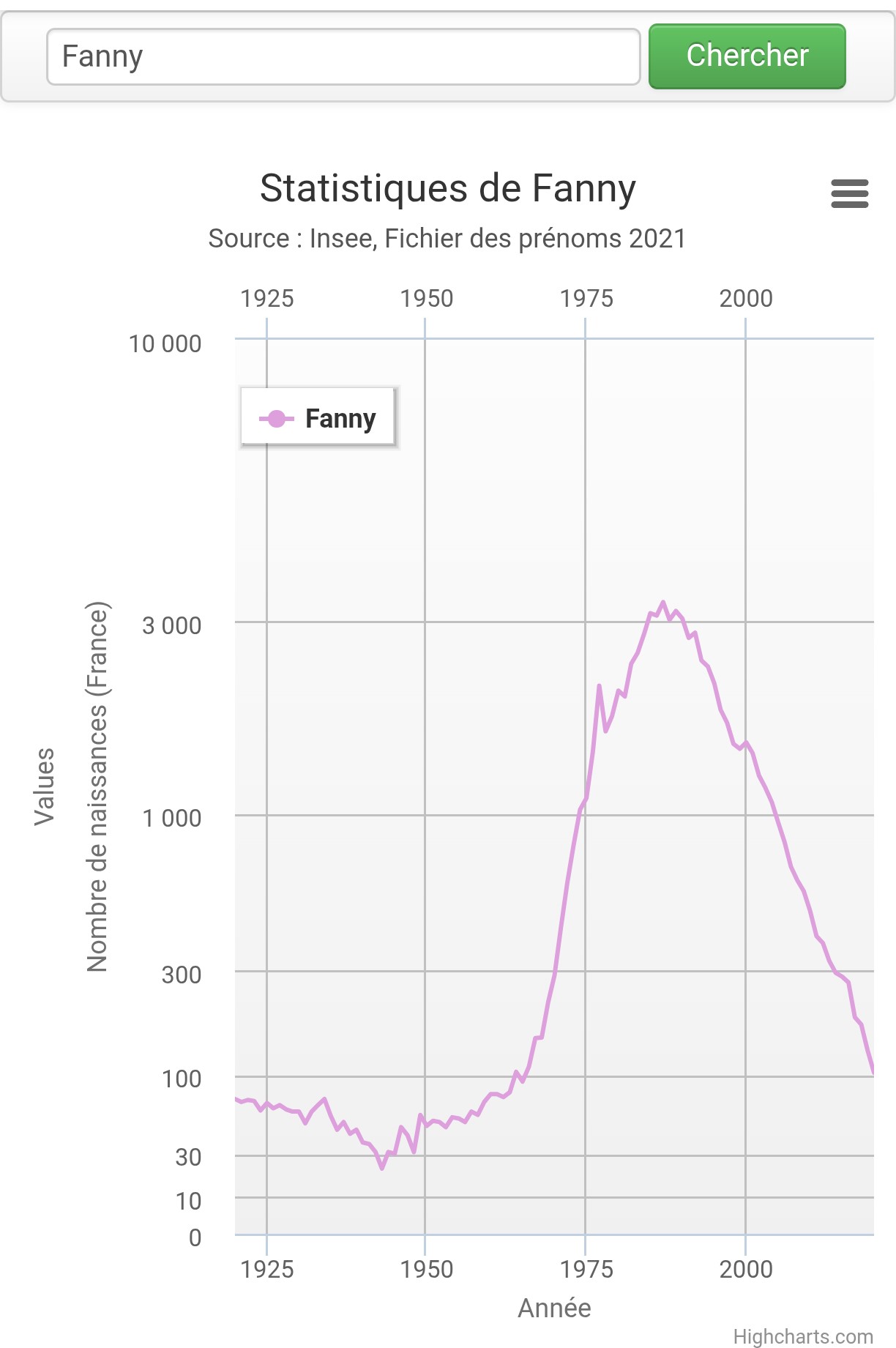
Having lived in the UK and USA I can assure you that most differences are innocuous. However there are some American words and names (Fanny) that are slang for genitalia in British English. Also the various impoliteness of common vulgar words vary.
its minor and mostly amusing.
A classmate of mine was named Fanny.
Fanny is the diminutive of Francis, but only when the person is female. One of my ancestors 100 years ago was called Fanny. I don’t think the name is so popular these days. It is though an old fashioned word, and I think many Brits will say fanny-pack instead of bum bag.
i have been married for 30 years with an argentinian woman (i am from Spain) and today still lots of words i dont understand, so dont worry just target a country yo choose, then when you hear in a different country at least you know what they are talking about. For intance “fregadero o pila” castellano Spain versus “bacha” argentina
As a person fluent in Spanish, I would learn the Spanish from Spain as that is the proper Spanish. Then if you have friends from Latin America you would be able to pick different words from here and there. It is similar to when British people say Americans don’t speak English! Sorry!