Example: (L2=Spanish)
Source article: Por qué en Francia están pintando las ventanas con tiza para combatir el calor - BBC News Mundo
Example: (L2=Spanish)
Source article: Por qué en Francia están pintando las ventanas con tiza para combatir el calor - BBC News Mundo
You can just “ignore” the word. What you consider a word worth learning is up to you, same with proper names or loanwords.
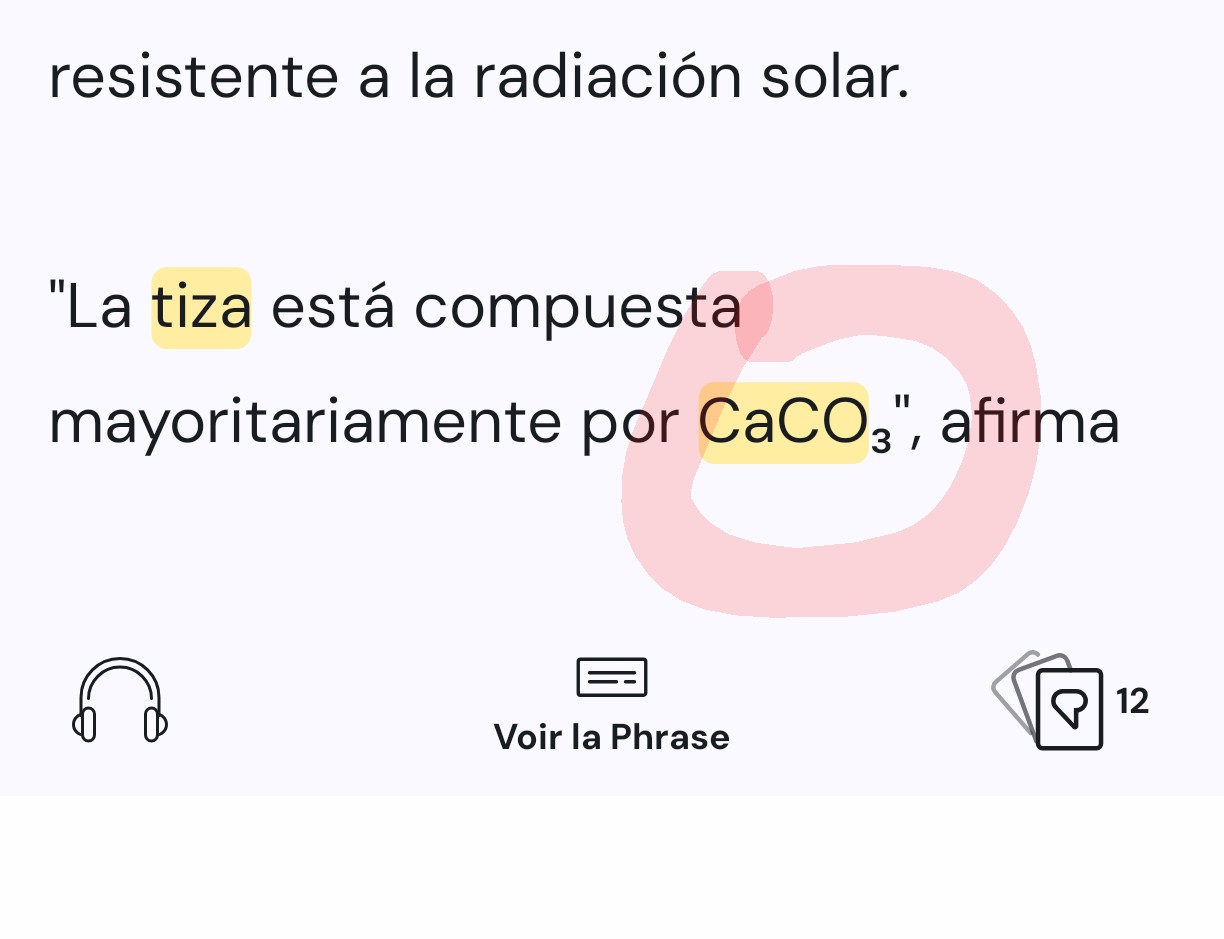
No: in the example above, ‘CaCO’ is yellow because ‘caco’ it’s a word I’ve encountered and lingqed before. The problem is caused by LingQ ignoring the digit ‘3’ at the end of the word.
Lingq should have shown CaCO3 in blue, and I would then ignore it.
CaCO3 isn’t a word anyway—it’s a chemical formula that exists independently of any language. So what’s the problem?
I don’t want to ignore ’ caco’ as it’s a word I’m still learning.
I’m just saying CaCO3 is a completely different word, the exact same way ‘an’ is different from ‘any’.
By showing ‘Caco’ in yellow, LingQ is telling me: this word is present in the text. It is not.
If I do a revision for the sentence or lesson, I will be tested on ‘caco’.
It’s not a big error, but it’s still an error.
LingQ ignores all number characters. If “caco” is what’s left, and you already have a word saved in LingQ with that spelling, then of course it will be displayed. Look at it positively! This way, you’ll be reminded of the thief, the capybara, or whatever meaning you’ve saved for it—even outside of the corresponding lesson.