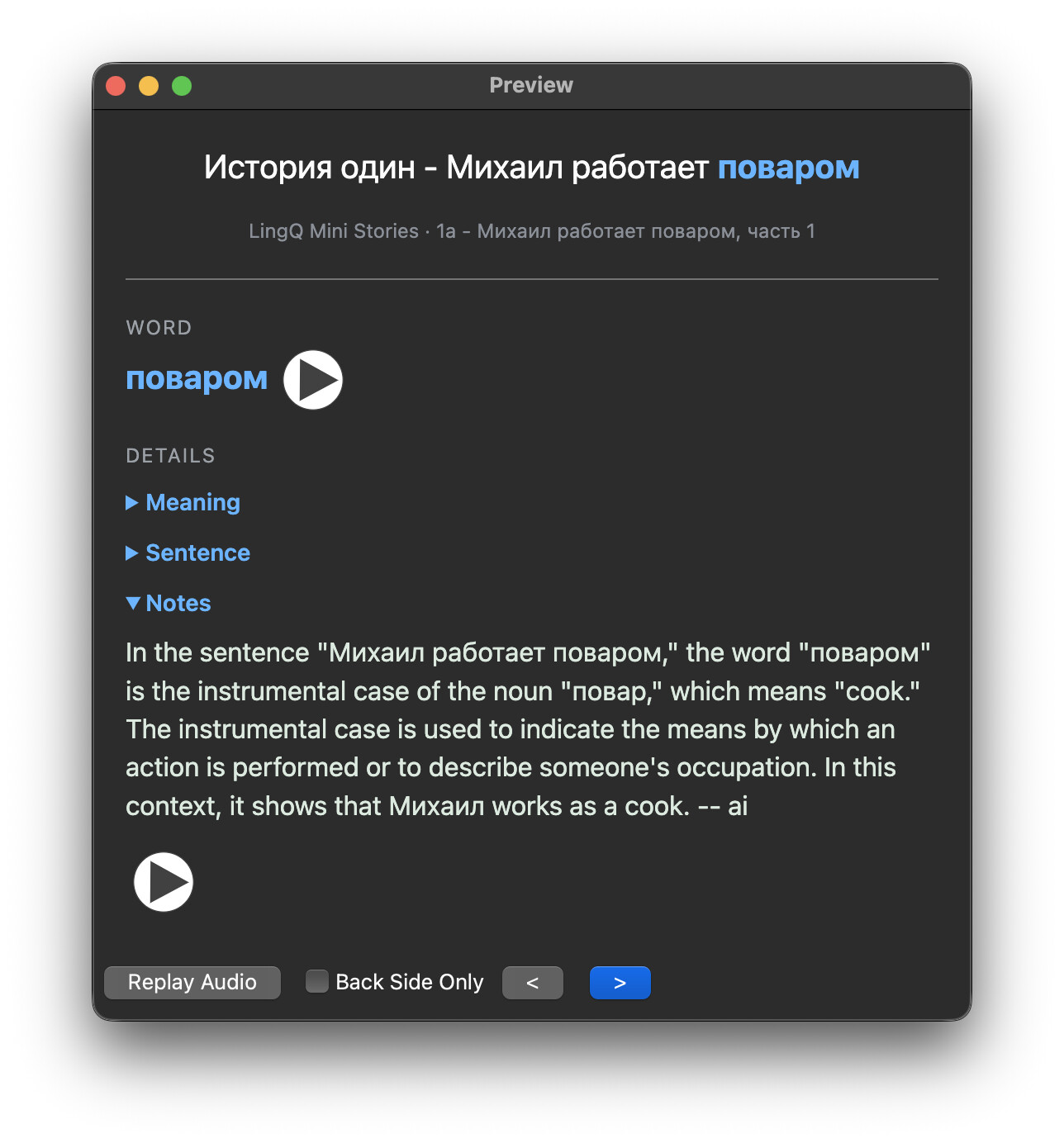
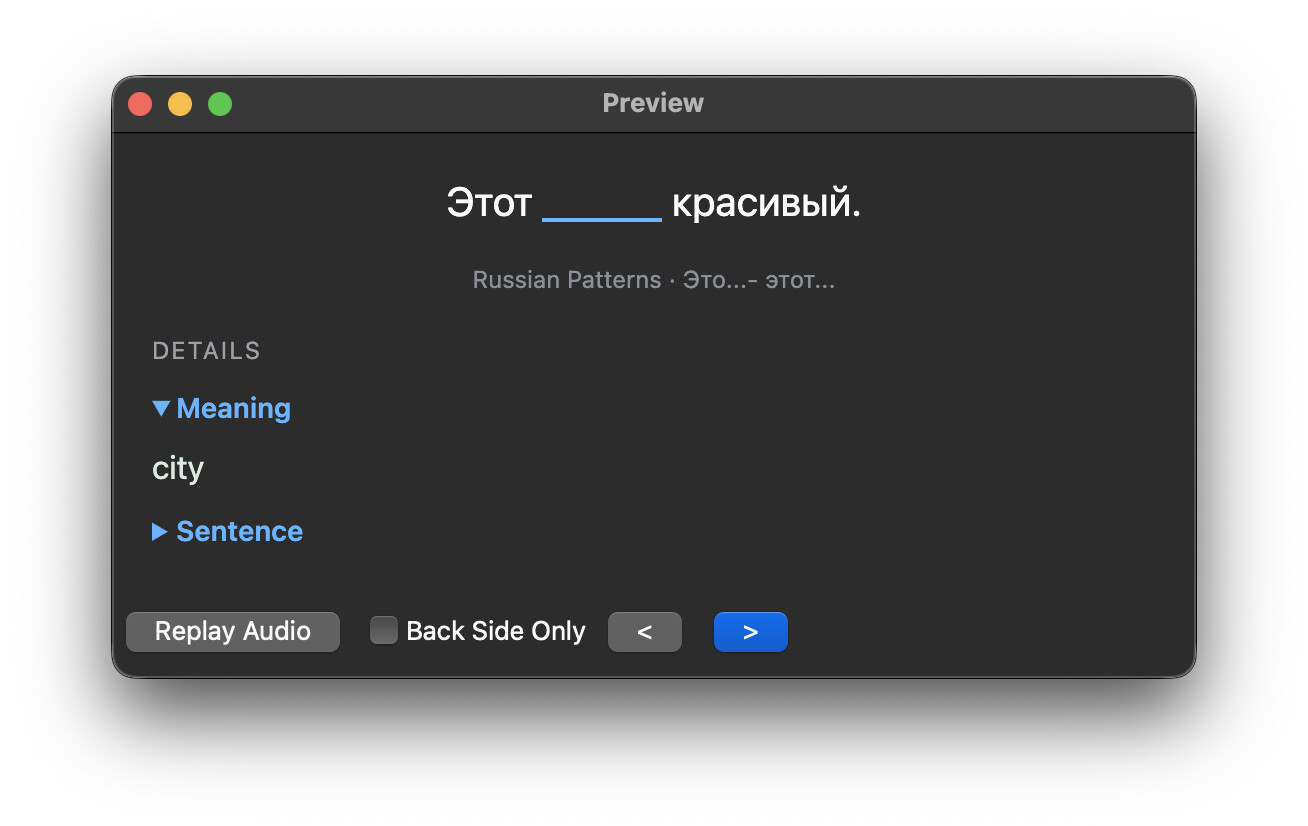
This all started when I noticed words I studied in Anki stuck far better than the ones I casually read in LingQ, especially rarer vocabulary. But I could never justify the amount of time I was spending making the cards. Reading is the part I actually enjoy, and every minute spent manually copying sentences into Anki was a minute not reading.
I tried LingQ’s native flashcard export. But getting the cards across to Anki was cumbersome enough where it couldn’t become a habit. When I did sit down to review them, the sentences had come through truncated, usually starting mid-thought, where the part that mattered most was missing. So there I’d be, blanking on a word I could’ve deduced if I just had a little more context. That was a particular kind of demoralizing. It stops feeling like you’re learning the word and starts feeling like evidence you never knew it.
The way I’d been thinking about it is that LingQ hands me content I’ve chosen, and actually want to read, and Anki is what makes words stick. Nothing sat in the middle… until now:

So I built Aminte. The name comes from the Romanian phrase “a-și aduce aminte” - “to bring to mind”. In practice it’s one, maybe two, click(s): click the extension while in a lesson, and send. The cards are in Anki before you’ve closed the tab.

*full demo here: https://www.youtube.com/watch?v=vw9wffsY0qo
Every selected LingQ level in that lesson becomes a Cloze card. The word is blanked out of the sentence, sized to the word so two similar sentences don’t look identical (often the case with clozed pronouns). Underneath sits the course and lesson it came from. The back has the word, your saved meanings exactly as you saved/wrote them, and LingQ’s translation of the sentence, both collapsed by default unless you need feedback.
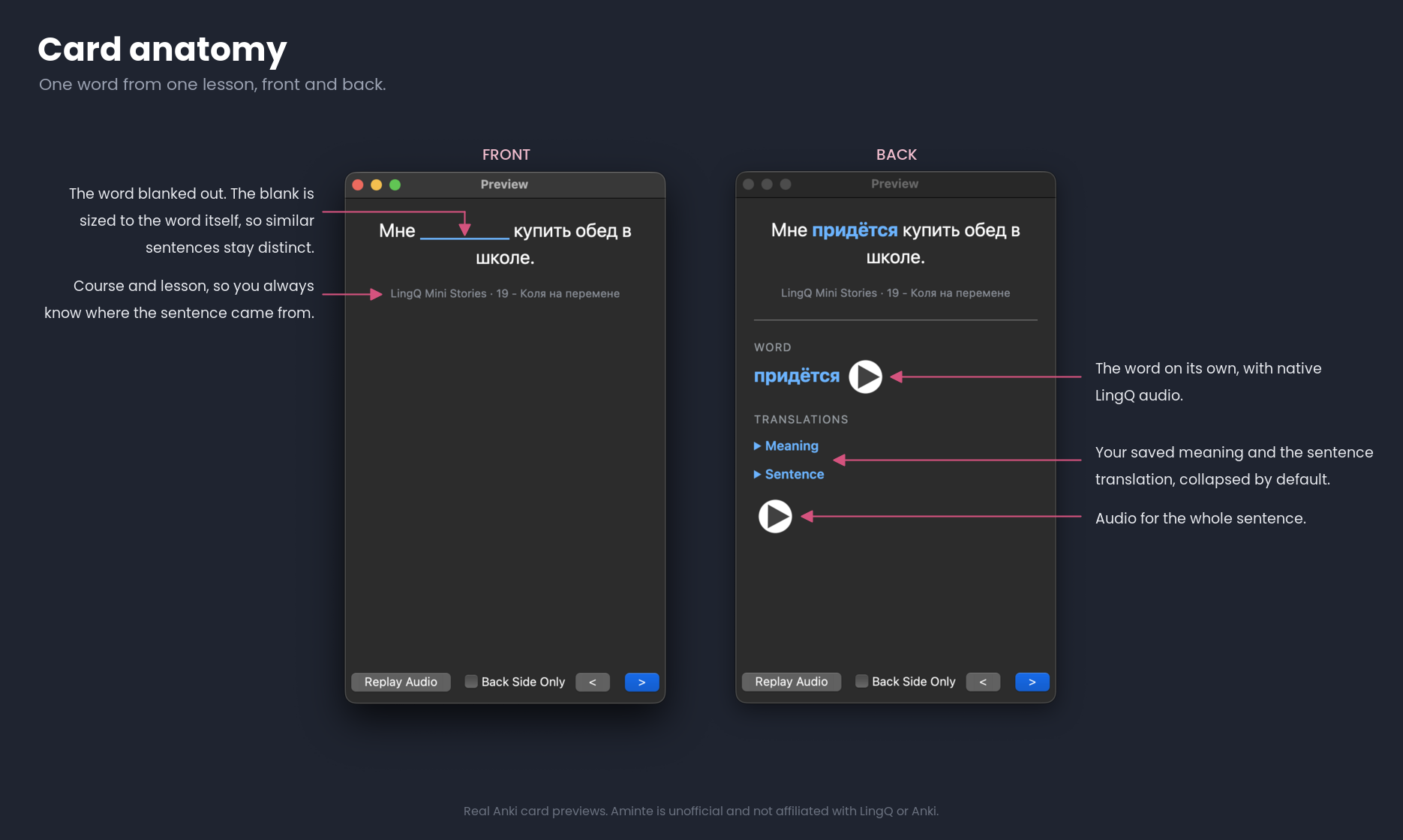
By design, there’s one card per word and sentence rather than one per word. If you meet the same word again in another lesson, you get a new card instead of it overwriting the first, so you end up studying words in many different contexts. Through reading, words naturally graduate in level, and less cards are created over time as more words become known.

The rest is options:
- How much context each card carries (one sentence by default, and up to five).
- Which LingQ levels become cards. It defaults to 1 to 3, since including everything tends to produce more cards than anyone can realistically review.
- Which deck they land in. It uses the course name by default, and if you rename it that sticks for the whole course.
- Tags, which default to the language code and are added rather than replaced, so anything you tagged by hand in Anki survives.
- Re-sending a lesson updates existing cards in place instead of duplicating them, so your review history is never lost.
- Native LingQ audio on the word, the sentence, or both.
All you need is Anki on desktop, with the free AnkiConnect add-on installed, and to be logged into LingQ in the same browser. There’s no account and nothing else to configure. This extension was built with privacy and simplicity at the forefront of its design.
This extension is free. The one paid feature is the audio, at $10 with 150 free clips so you can try it on your own lessons first. It’s there to fund ongoing development, and everything else above works without it. You pay once and it’s yours, every future version included. I have enough subscriptions, and I’m sure you do too.
Please note this is unofficial. I’m not affiliated with LingQ and this isn’t endorsed by them. It works through one’s own logged-in session against LingQ’s own API, which also means that if their internals change it may break until I push an update.
I’ve tested it end to end on nine languages, but I’m one person and my own reading is mostly Russian right now, so I’d really like to hear from people using anything else, particularly Japanese, Chinese and Thai, where word segmentation gets interesting.
I greatly look forward to seeing the community benefit from this as I have. I always welcome any feedback and feature requests.
Download: https://chromewebstore.google.com/detail/aminte/lhejbifkielekmlbibjapplojjiboahe