It would be very useful to group courses to create series of ebooks. For example, all the Harry Potter books could be added to a course collection called “Harry Potter.” Right now it can be done with tags, but it’s hard to visualize.
A very simple solution would be to allow dots in playlists names (see below), and use those dots to fold/unfold groups of playlists that start with the same suffix.
This doesn’t require any change in the data/DB, only in the client #show-list-of-playlists JavaScript code .
Example: if you have 6 courses/playlists named
Active Playlist
Book.The bible
Book.Harry Potter.Philosopher’s Stone
Book.Harry Potter.Chamber of Secrets (
News.europe
News.world
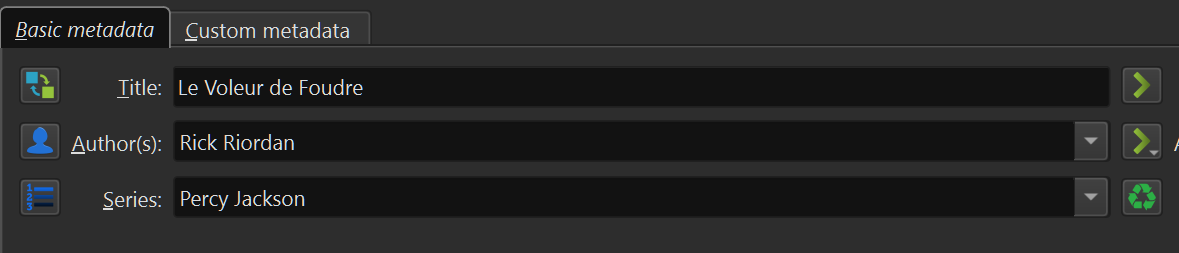
Looking at books metadata in Calibre app shows that it has Title, Author and Series. Would be cool if LingQ can access that data from books imported. The Series data could be used to generate Collection/series. Of course we should be able to create our own custom Collection too.
So on top of viewing by Lesson, Course there could be Collection/Series and maybe Author too
@mark
This is about housekeeping.
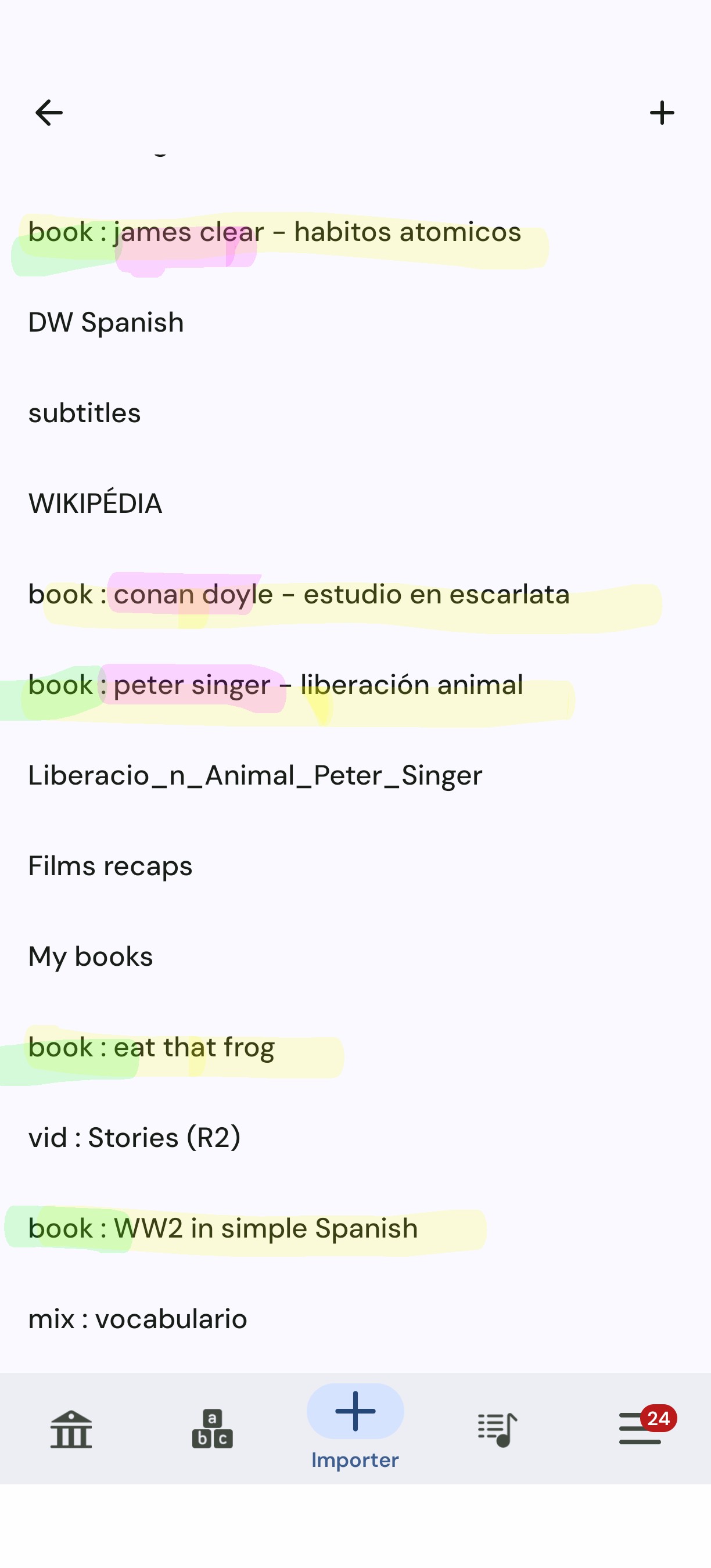
Flat/single-level lists of 30+ courses are uncomfortable to navigate, so we don’t create finer groups (=‘courses’) that would make later retrieving practical/doable.
That’s why I have 500+ lessons in my Quick Imports course which I can’t revisit.
Courses and playlists are single-level containers, so we can’t realistically organise hundreds of lessons/audios for easier retrieval in flat lists, especially on a small screen (phone).
My request is about giving us a way to organise courses and playlists on multiple levels.
Using the breadcrumbs visual pattern for navigation (when the lessons are sorted alphabetically):
All Courses > Books > Fantasy > Harry Potter
Title 1
Title 2
Title 3
Fan fictions > … (3)
The method I mentioned above - using dots in names to simulate hierarchy - can require only changes in the client UI, not in the DB nor the server code. I’ve implemented such a solution (web only, Javascript) in the past.
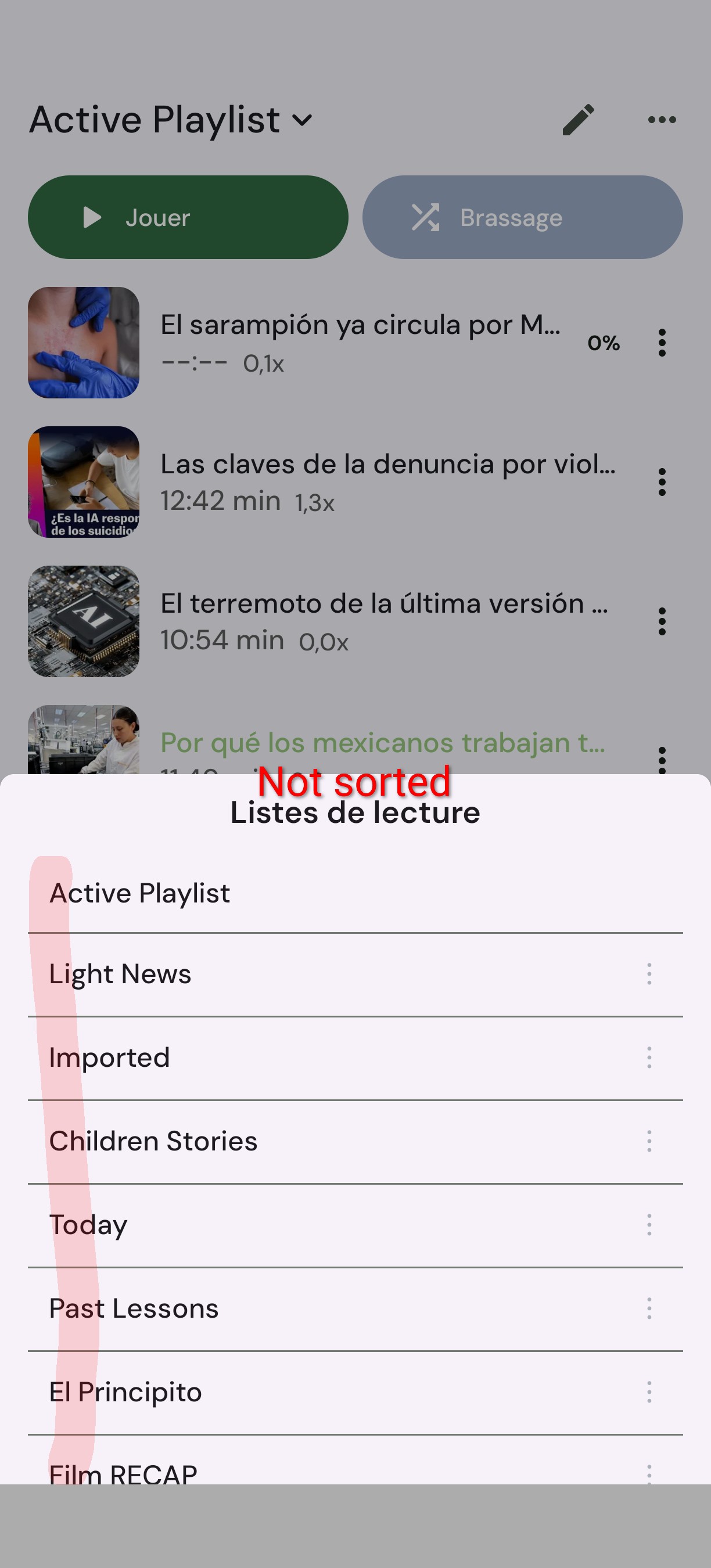
Btw, on Android, playlists are not sorted alphabetically:
Books metadata isn’t always consistent, even in the big curated databases like WorldCat or Goodreads, much less in Amazon. Although WikiData and VIAF can be helpful for crosswalking between languages, it’s important for the developers to keep in mind that consistency in book metadata is always a work in progress.
that is true, using calibre, I’ve had problems with author name, sometimes it is not full name or first name and last name switch position. author is important for me because I like to stick to same author for a while.
Searching requires criterias to search on. It can’t be the names/titles, so it’d have to be metadata (labels, tags, authors, …), that present
the same problem as the current folders system: they are single-level
the same workaround: simulating structure/embedding with dotted names.
Ex : label= “health.medecine.vaccine”, “health.sport…“, …
The label system is more powerful, but it’s harder to navigate and maintain (edit). This could require too much development effort, across all the platforms, to provide the users with a simple UI and a engaging/satisfying UX, while everybody already knows how to navigate multi-level folders structures.
That would be a dream come true for me. It would tremendously help organizing and make searching much easier. Now you have to go to View all Courses then search for a tag. It is doable but in my case, that returns many, many courses.