Thank you. It is much easier imho as I’ve been already learning Korean for 2~3 years, with some focus on grammar and Hanja, too. Therefore I have some fundament I can build on. I find it relatively easy to remember the meaning of the Kanji. Remembering the spelling is another story, though (not to mention how to write them). 
良いお単語して下さりありがとうございます。(propably not very idiomatic  )
)
2 Likes
영어와 달리 한국어와 일본어같은 교착어(agglutinative language)의 경우 Known words 수가 상당히 부풀려지는 것 같아요. (영어에서도 go, went, going, gone, goes 같이 여러 형태가 존재하긴 하지만 교착어의 경우 훨씬 더한 것 같아요)
같은 단어의 변형형태에 LingQ를 여러번 만들게 되는 것 또한 파생되는 문제 같아요. 어떻게 이 문제를 다루시나요?
Unlike English, agglutinative languages like Korean and Japanese seem to have significantly inflated known word counts. (English does have multiple forms, like “go,” “went,” “going,” “gone,” and “goes,” but the number seems to be even higher in agglutinative languages.)
Creating multiple LingQs for the same word’s variants also seems like a secondary issue. How do you address this?
That does not work on my iPad.
Try this link Learn languages online - LingQ
2 Likes
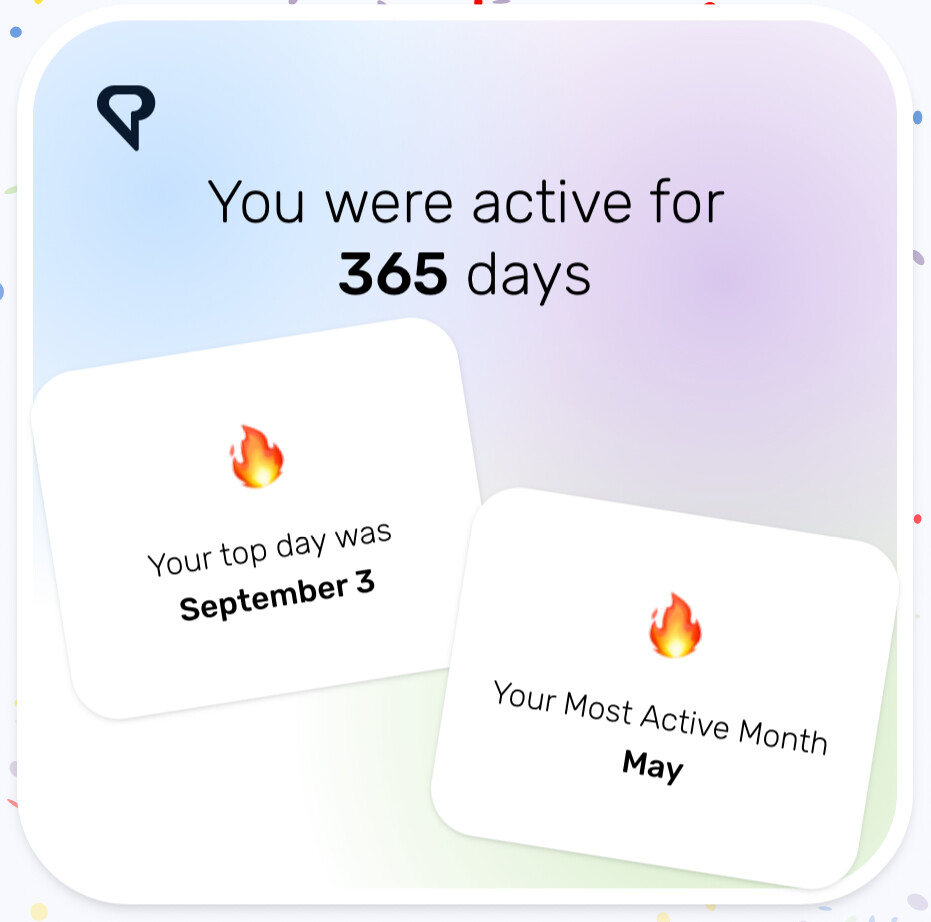
Thank you, that works a treat. I’m top 1% in French - hoorah - and top 2% in German - oh no, I’m a failure! Seriously though, it doesn’t mean anything except that I’ve worked hard. And as a result I can now watch French TV films and understand most of the dialogue. Isn’t it odd that as you get better, the language seems to slow down!
Professor Tim Keeley recently released a video in which he says he doesn’t like it when people tell him he has a talent for language, without realising the huge hard work he has put in. He’s right.
This is the statistic I like:
3 Likes
This is definetely correct, especially for Japanese, were on top of this the errative word splitting creates additional “words”. My own guess based on word count estimators I found on the web is that my passive korean vocabulary is about 3000 words (words in the sense of distinct meanings, so different forms count as one word). I assume this to be low B1. My grammar skills are more like B2, as I practice the grammar and actually like it.
To answer your question. I only create LingQ’s for the first few versions of a word I come accross, and later on ignore further ones once I am at the point that I have seen the word often enough for it to stick for long enough that I can recall it during reading (I usually read for 15~30 mins in Korean in one go). Due to this I create lots of known words, but if I come across a “known” version later on and can’t remember the meaning anymore, I can still create a LingQ. I personally don’t mind creating LingQ’s for several variations of the same word over time. It just annoys me and slows down the reading if I have to create LingQ’s for 12 versions of one word within 2 minutes.
I must add though that I don’t care all that much about the statistics. I posted mine here for fun. I usually judge my skills based on what I am capable of with the language, not some numbers. The knwon words are somewhat useful for judging the difficulty of new material, though.
When it comes to creating LingQ’s, I try to find a good balance between creating enough LingQ’s for later reference and in regards to the ability to judge on text difficulty, while at the same time trying to maintain a somewhat reasonable reading speed. Stopping for every word slows me down, not creating LingQ’s forces me to look up words again later on, slowing me down, too. So I try to aim for the sweet spot. It’s similar to the new words count. To high is bad, but to low is not good either. I won’t learn much if everything I consume is easy peasy. (The Japanese texts - podcast transcripts - I am currently reading have about 50% new words. The Korean content I use is between 15~25%).
3 Likes
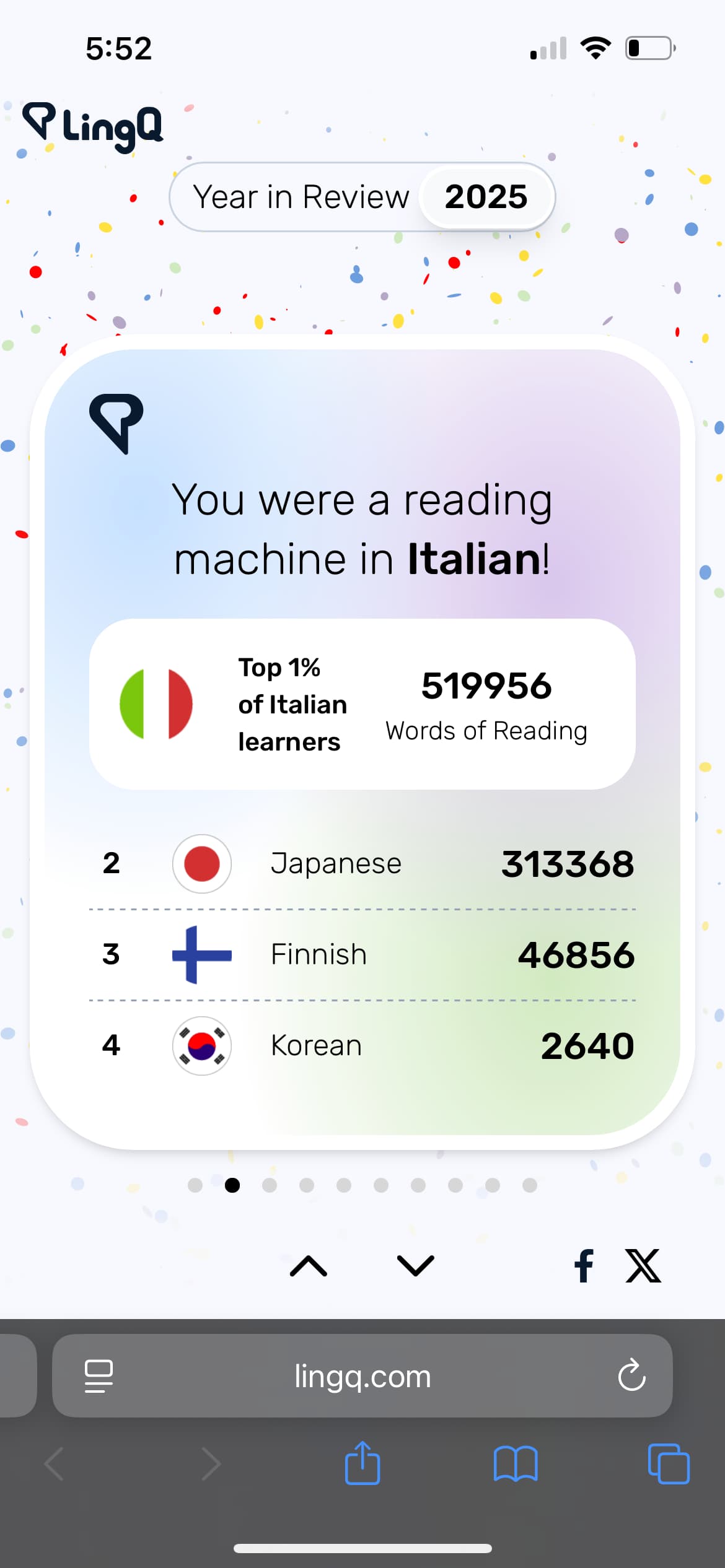
I used it mostly for Italian but also a podcast I like in Japanese. Was active 365 days. With spoken Japanese it is really annoying how it makes a new LingQ for example of telephone if you add in spoken language “tte” at the end of the word to signal stress but also a kind of filler. 電話 電話って. It’s not like Finnish cases. Also they split oddly like 電話してる could have a funky lingq like just the last two hiragana even though they are not typically standalone.
1 Like
I like to listen to audiobooks, like the Harry Potter series in Spanish and Italian. I listen to them on Play Books but I manually add the time on Lingq. I find it nice to have all the stats in the same place. I do the same when I speak to people in the different languages I am learning.
4 Likes