Hahaha. Freaking hilarious video! 
1.Learn the IPA (International Phonetic Alphabet) :
2.View the phonetic and phonology of your language and the target language , if I’m learning English , I see these articles :
1.Phonology of English : English phonology - Wikipedia
2.Phonology of French : French phonology - Wikipedia
3.Listen the natives speakers in the videos , music etc…
guido62, you should be a really sophisticated language learner to make such discouraging statements in such a confident manner.
But after all, this is just not right. Trying to produce new sounds you will succeed at developing your muscles used for it and vice verse.
For anyone interested in this, make sure to check Professor Arguelles’ videos on youtube about this very topic. There are 4 parts.
Can you share the link right here if you don’t mind?
Even though it’s extremely easy to find:
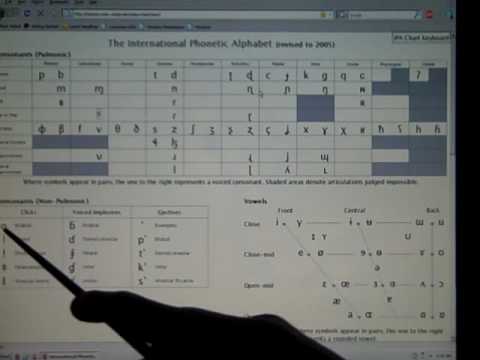
That’s the first of 4 parts.
Yup, I found it myself but it would be nice to have all resources at one place so that everyone could access to them easily. Humans are lazy creatures by nature.
I have just heard part4. In a 33 minutes monolgue, there was no concrete solution given in order to get rid of a thick accent. In the end, it all comes down to having a natural talent for imitating a particular accent and that’s the feasible solution he had come up with after his long waffling. Talk is cheap. He has no clue how stressul it is to have a thick accent in real life , your job, life, day to day tasks everything depends on smooth communication. In my case, I am not aiming for a total native like accent but I’m aiming for something in the middle where I am not told to repeat myself after every third sentence.
The only way I think that is possible is to live in your target country and communicate with natives on a daily basis. Just changing your perception about things is not a quick fix to everything. What’s the point of having a huge vocabulary if no one can understand you.
I’ll listen to other parts of his lecture tomorrow.
I don’t think you paid attention to his lectures properly. Watch from part 1 to understand what he has to say. Of all people, I think he understand almost every single problem of language learning.
I’m not saying this is the case with you, asad100101 (I haven’t heard your accent in English - and even if I had, I’m not a native speaker and should probably not judge anybody), but if somebody speaks a target language and the natives seem to have difficulties understanding, a few questions arise:
Exactly what about the pronunciation do the natives have difficulties with?
Does the person have problems with individual phonemes?
Is it the sentence intonation?
Has the person spent any time at all listening to the target language?
By all means, watch the lectures from part 1.
deleted